The 50/30/20 budget rule is a simple method for dividing your monthly income into three broad categories: needs, wants and savings or debt repayment. It is commonly used by people who want a straightforward way to organise their personal finances without tracking every individual expense.
Under this approach, 50% of income goes toward needs, 30% toward wants and 20% toward savings and debt repayment.
The percentages are a general framework, not a strict financial requirement. Your actual budget may need to be adjusted according to your income, rent, family responsibilities, debt and financial goals.
Quick Information
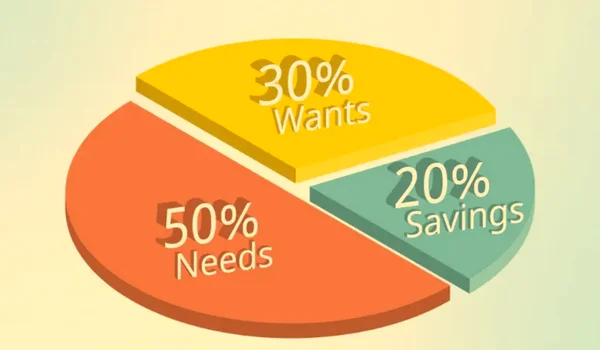
| Category | Suggested Share | Examples |
| Needs | 50% | Rent, groceries, utilities, transport |
| Wants | 30% | Shopping, entertainment, dining |
| Savings & Debt | 20% | Savings, investments, loan repayment |
| Total | 100% | Monthly take-home income |
What Is the 50/30/20 Budget Rule?
The 50/30/20 rule divides your after-tax or take-home income into three categories:
50% for Needs
Needs are expenses that are important for your basic living and financial commitments.
Examples include:
- Rent
- Home loan EMI
- Groceries
- Electricity
- Water
- Internet and phone bills
- Transportation
- Basic healthcare
- Insurance premiums
- Essential education expenses
- Minimum debt payments
The objective is to keep essential expenses around half of your income where practical.
30% for Wants
Wants are expenses that improve your lifestyle but are not essential for basic living.
Examples include:
- Restaurant meals
- Entertainment
- Shopping
- Movies
- Streaming services
- Hobbies
- Vacations
- Premium subscriptions
- Non-essential gadgets
This category gives you room to enjoy your income without allowing discretionary spending to dominate your budget.
20% for Savings and Debt Repayment
The final 20% is intended for improving your financial position.
It can include:
- Emergency fund
- Bank savings
- Mutual fund investments
- Retirement savings
- Additional loan repayment
- Other long-term financial goals
If you have expensive debt, using some or all of this allocation for debt repayment may be appropriate before increasing investments.
How the 50/30/20 Rule Works
Suppose your monthly take-home income is ₹60,000.
Using the 50/30/20 structure:
| Category | Percentage | Amount |
| Needs | 50% | ₹30,000 |
| Wants | 30% | ₹18,000 |
| Savings & Debt | 20% | ₹12,000 |
| Total | 100% | ₹60,000 |
This does not mean you must spend exactly ₹30,000 on needs and ₹18,000 on wants every month. The figures are targets that help you organise your finances.
What Counts as a Need?
A need is generally an expense required for basic living or an important financial obligation.
For example, if you pay ₹15,000 rent, ₹6,000 for groceries and ₹4,000 for utilities and transportation, these would generally fall into the needs category.
However, some expenses can be difficult to classify.
For example, a basic mobile plan may be a need, while an expensive upgraded plan may contain a significant wants component.
What Counts as a Want?
Wants are expenses you can potentially reduce or postpone without affecting basic living requirements.
For example:
- Ordering food instead of cooking
- Buying clothes you do not need
- Premium streaming services
- Frequent entertainment
- Luxury travel
- Upgrading a functioning phone
The classification depends on your personal circumstances.
What Counts as Savings?
The 20% category is not limited to money sitting in a savings account.
It can include money allocated toward:
- Emergency savings
- Retirement
- Long-term investments
- Short-term financial goals
- Additional debt repayment
For example, someone earning ₹50,000 might allocate ₹5,000 toward an emergency fund, ₹3,000 toward investments and ₹2,000 toward additional loan repayment.
How to Calculate the 50/30/20 Budget
The calculation is simple.
Needs = Monthly Take-Home Income × 50%
Wants = Monthly Take-Home Income × 30%
Savings/Debt = Monthly Take-Home Income × 20%
For an income of ₹80,000:
- Needs: ₹40,000
- Wants: ₹24,000
- Savings/debt: ₹16,000
The same calculation can be applied to different income levels.
Is the 50/30/20 Rule Suitable for India?
The basic principle can be used in India, but the percentages may not suit every household.
For example, someone living in a high-rent city may spend considerably more than 50% of income on essential expenses. A person with a large home loan or medical or family responsibilities may also need a different allocation.
On the other hand, someone with low living costs may be able to save more than 20%.
Therefore, treat the rule as a starting framework rather than a fixed formula.
How to Modify the Rule
You can adjust the percentages according to your situation.
For example:
60/20/20
- 60% needs
- 20% wants
- 20% savings
This may suit someone with higher essential expenses.
Another person might use:
50/20/30
- 50% needs
- 20% wants
- 30% savings and investments
The best allocation is one that is realistic and helps you consistently meet your financial goals.
Benefits of the 50/30/20 Rule
Easy to Understand
You do not need a complicated spreadsheet to get started.
Encourages Saving
It creates a specific target for savings and debt repayment.
Controls Lifestyle Spending
The wants category creates a defined limit for discretionary expenses.
Flexible
The percentages can be adjusted according to your circumstances.
Useful for Beginners
People new to budgeting can use it as a simple starting point.
Limitations of the 50/30/20 Rule
The rule also has limitations.
It may not work well for someone with:
- Very low income
- High rent
- Large loan EMIs
- Significant family responsibilities
- Irregular income
- Large medical expenses
It also does not account for every financial goal or expense category. A detailed budget may therefore be more useful for households with complex finances.
Tips for Using the Rule Effectively
- Calculate percentages using take-home income.
- Track actual spending before setting targets.
- Include annual expenses in your budget.
- Treat emergency savings as a priority.
- Reduce unnecessary wants if essential expenses increase.
- Review your budget every month.
- Increase savings when your income rises.
- Prioritise expensive debt where appropriate.
Frequently Asked Questions
Is the 50/30/20 rule mandatory?
No. It is a budgeting method, not a legal or financial requirement.
Does the rule use gross salary or take-home salary?
It is generally easier to apply the rule to take-home income, because this is the money actually available for spending and saving.
Can I save more than 20%?
Yes. If your expenses allow it, saving and investing more than 20% can help you reach long-term financial goals faster.
What if my needs are more than 50%?
Do not force your budget into the 50/30/20 structure. Reduce discretionary spending where possible and use percentages that realistically match your financial situation.
Conclusion
The 50/30/20 budget rule provides a simple way to organise personal finances: approximately 50% for needs, 30% for wants and 20% for savings and debt repayment.
It should not be treated as a universal formula. Adjust the percentages according to your income, living costs, debt and financial goals. The most useful budget is one that you can realistically follow every month.