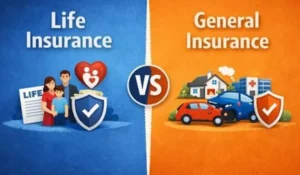
Life insurance is designed to provide financial protection against risks associated with a person’s life. Within life insurance, there are different types of policies, including term insurance, whole life insurance, endowment plans and unit-linked insurance plans (ULIPs).
This often creates confusion around the phrase term insurance vs life insurance. In reality, term insurance is a form of life insurance. The more useful comparison is between term insurance and other life insurance products, particularly policies that combine life cover with savings or investment-related features.
The main difference is generally the structure of the policy. Term insurance is primarily designed to provide life cover for a specified period, whereas some other life insurance products may provide life cover together with maturity, savings, bonus or market-linked benefits, depending on the product.
What Is Term Insurance?
Term insurance is a type of life insurance that provides life cover for a specified policy term.
If the insured person dies during the policy term, the applicable death benefit is paid according to the policy conditions.
A pure term insurance policy generally focuses on providing life protection rather than creating a savings or investment corpus.
For example, a person may purchase a term insurance policy with a ₹1 crore death benefit for a specified period. If the insured person dies while the policy is in force and the claim is admissible under the policy terms, the nominee may receive the applicable death benefit.
If the insured survives the policy term, a pure term policy generally does not provide a maturity benefit.
The exact benefits depend on the product and policy wording.
What Is Life Insurance?

Life insurance is the broader category of insurance that provides benefits linked to the life of the insured person.
It includes several different products, such as:
- Term insurance
- Whole life insurance
- Endowment plans
- Money-back plans
- ULIPs
- Other approved life insurance products
Therefore, saying “term insurance vs life insurance” is technically not a comparison between two completely separate categories.
Term insurance is life insurance.
The real comparison is usually between term insurance and other forms of life insurance that may combine protection with savings or investment-related features.
Term Insurance vs Life Insurance: Quick Comparison
| Feature | Term Insurance | Other Life Insurance Products |
| Category | Type of life insurance | Life insurance |
| Primary purpose | Life protection | Protection plus savings/investment or other benefits, depending on product |
| Policy term | Specified period | Varies by product |
| Death benefit | Yes, subject to policy terms | Generally applicable, depending on product |
| Maturity benefit | Usually not available under a pure term plan | May be available in some products |
| Investment component | Generally absent in pure term insurance | Present in some products |
| Premium structure | Generally focused on cost of life cover | Depends on product and benefits |
| Market-linked risk | Generally not applicable to pure term cover | Applicable to products such as ULIPs |
| Bonuses | Generally not a feature of pure term insurance | May apply to participating products |
| Main use | Income/family protection | Protection plus other financial objectives depending on product |
Term Insurance vs Traditional Life Insurance
The comparison becomes clearer when term insurance is compared with traditional savings-oriented life insurance.
Term insurance
Term insurance primarily provides a death benefit during the policy term.
Savings-oriented life insurance
Certain traditional life insurance products may provide a combination of:
- Life cover
- Maturity benefit
- Guaranteed benefits, where applicable
- Bonuses or additional benefits, where applicable
The exact benefits depend on the product.
This means a policy with a maturity benefit can have a different premium structure from a pure term insurance policy offering a similar level of life cover.
Difference in Purpose
The primary purpose of term insurance is financial protection.
It can be particularly relevant when a person’s family depends on their income.
For example, suppose a person earns ₹15 lakh per year and has a spouse, children and a home loan. If the person dies unexpectedly, the family could lose a significant source of income.
A term insurance policy can provide a death benefit that may help the family manage expenses, liabilities and future financial needs.
Other life insurance products may be designed to address both protection and additional financial objectives, depending on their structure.
Difference in Premium
Premiums cannot be compared simply without considering the benefits being provided.
A pure term insurance policy generally provides a specified life cover without a savings or investment component. Consequently, its premium structure is focused primarily on the cost of providing that life cover.
A savings-oriented life insurance product may include additional benefits, such as a maturity benefit or bonuses where applicable. Its premium therefore reflects the broader structure of the product.
For example, two policies may both mention ₹50 lakh of life cover, but their premiums can differ substantially if one policy also provides savings or maturity benefits.
Difference in Maturity Benefit
This is one of the most important differences.
Term insurance
A pure term insurance policy generally pays the death benefit if the insured event occurs during the policy term. If the insured survives the term, there is generally no maturity payout.
Other life insurance products
Some life insurance products provide a maturity benefit if the policyholder survives until the maturity date.
The amount and conditions depend on the particular policy.
Therefore, people should not assume that every life insurance policy works like term insurance.
Difference in Investment Component
Pure term insurance is generally not an investment product.
Some other life insurance products may contain savings or investment-linked components.
For example, a ULIP combines life insurance protection with a market-linked investment component. The investment component is subject to market risks.
Traditional participating life insurance products may provide bonuses according to their terms and applicable product structure.
Therefore, when comparing policies, it is important to distinguish between:
Pure protection → Term insurance
and
Protection + savings/investment features → Certain other life insurance products
Term Insurance vs ULIP
ULIPs are another type of life insurance product that can sometimes be compared with term insurance.
| Feature | Term Insurance | ULIP |
| Main purpose | Life protection | Life protection plus market-linked investment |
| Investment component | No in pure term plans | Yes |
| Market risk | No investment market risk | Investment value is subject to market risk |
| Maturity benefit | Generally absent in pure term plans | Applicable according to product terms |
| Investment choices | Not applicable | May offer investment funds/options |
| Complexity | Generally simpler | Generally more complex |
| Main focus | Protection | Protection and investment |
The two products therefore serve different purposes and should not be treated as identical.
Example: How Term Insurance Works
Suppose Raj purchases a term insurance policy with:
- Life cover: ₹1 crore
- Policy term: 30 years
- Premium: As specified by the insurer
- Nominee: His spouse
Raj continues paying premiums according to the policy schedule.
If Raj dies during the policy term and the claim is admissible, the nominee may receive the applicable death benefit.
If Raj survives the entire term, a pure term policy generally ends without a maturity payout.
This structure allows term insurance to focus mainly on life protection.
Example: How a Savings-Oriented Life Policy Works
Suppose Priya purchases a life insurance savings product.
The policy provides life cover and also specifies a maturity benefit, along with any applicable guaranteed or non-guaranteed benefits according to the product.
Priya pays premiums according to the policy schedule.
If she dies during the policy term, the applicable death benefit is paid according to the policy.
If she survives until maturity, the applicable maturity benefit may become payable according to the policy terms.
This is different from a pure term insurance structure.
Which Is More Suitable for Income Protection?
Term insurance is specifically structured around life protection for a defined period.
For someone whose main objective is to create financial protection for dependants during their working years, a pure term policy may be considered as one option.
The appropriate amount of cover depends on factors such as:
- Current income
- Family expenses
- Number of dependants
- Outstanding loans
- Children’s future financial requirements
- Existing assets
- Existing life insurance
- Retirement and other financial goals
There is no universally appropriate sum assured for everyone.
Is Term Insurance Cheaper Than Other Life Insurance?
A direct comparison of premiums can be misleading because different products provide different benefits.
A pure term policy generally concentrates on life protection. Other life insurance products may include maturity benefits, savings components, bonuses or investment-linked features.
As a result, a term policy can have a substantially different premium structure from a savings-oriented life insurance policy offering a similar death benefit.
The correct comparison should therefore consider both the premium and the benefits received.
What Happens If You Stop Paying Premiums?
The consequences of missing premiums depend on the policy and its terms.
A policy may enter a grace period, lapse or acquire other applicable status depending on the product, premium payment structure and policy conditions.
IRDAI-approved policy documents define terms such as grace period, lapse and revival, and the consequences can differ between products.
Therefore, policyholders should not assume that missing a premium automatically produces the same result for every life insurance product.
Term Insurance Riders
Some term insurance policies may offer additional benefits through riders or add-on covers.
Depending on the product, these can include benefits related to:
- Accidental death
- Critical illness
- Disability
- Waiver of premium
- Other specified risks
Riders generally involve additional terms and may require an additional premium.
A rider should be evaluated based on the actual coverage it provides rather than being added automatically.
Important Things to Check Before Buying Term Insurance
Before purchasing a term insurance policy, check:
- Sum assured
- Policy term
- Premium payment term
- Premium amount
- Death benefit structure
- Exclusions
- Rider benefits
- Claim conditions
- Nomination details
- Grace period
- Revival conditions
- Free-look provisions
- Policy servicing options
Most importantly, provide accurate information in the proposal form, particularly information relevant to underwriting.
Term Insurance vs Life Insurance: Common Confusion
A common misconception is that term insurance and life insurance are completely separate products.
The correct relationship is:
Life Insurance → Broad category
Under this category:
Term Insurance → Pure protection-oriented life insurance
Endowment → Life insurance with savings/maturity features
Whole Life → Life cover extending according to the product structure
ULIP → Life insurance with a market-linked investment component
Thus, term insurance is one type of life insurance.
Frequently Asked Questions
Is term insurance the same as life insurance?
Term insurance is a type of life insurance. The phrase “life insurance” refers to a broader category that includes term insurance and several other life insurance products.
Which is better: term insurance or life insurance?
The comparison depends on the specific objective. Term insurance is primarily designed for life protection, while some other life insurance products combine protection with savings, maturity or investment-related features. The appropriate choice depends on the person’s financial requirements.
Does term insurance provide a maturity benefit?
A pure term insurance policy generally does not provide a maturity benefit if the insured survives the policy term. The specific policy wording should always be checked.
Is term insurance an investment?
Pure term insurance is primarily a protection product rather than an investment product.
Can term insurance have riders?
Yes. Depending on the product, insurers may offer riders or additional covers for specified risks.
What happens if I survive my term insurance policy?
Under a typical pure term insurance policy, the policy ends when the term expires and no maturity benefit is payable. Some products may have different features, so the policy document should be checked.
Can I have term insurance and another life insurance policy?
Yes. A person can hold multiple life insurance policies, subject to applicable underwriting, disclosure and policy conditions.
Conclusion
The key point in term insurance vs life insurance is that term insurance is actually a type of life insurance.
Term insurance is primarily designed to provide life protection for a specified period. Other life insurance products may combine life cover with savings, maturity benefits, bonuses or market-linked investment features, depending on the product.
Before buying a policy, compare more than just the premium. Look at the amount of life cover, policy term, premium payment period, death benefit, maturity benefits, exclusions, riders and other policy conditions.
The right product depends on the financial risk you are trying to manage and the benefits you need from the insurance policy.