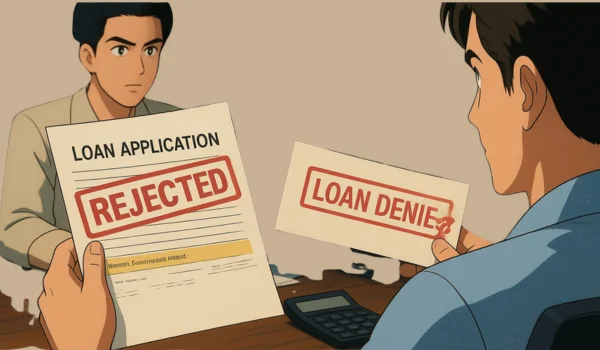
A personal loan application can be rejected even when the applicant has a regular income. This is because lenders assess several factors before approving an unsecured loan, including credit history, income, employment or business stability, existing debt and repayment capacity.
There is also no single eligibility formula followed by every bank or NBFC. A borrower who is approved by one lender may not meet another lender’s internal credit criteria.
TransUnion CIBIL states that lenders may consider the applicant’s CIBIL Score and Report, employment status, annual income and EMI repayment history when assessing a personal-loan application.
Understanding why applications are rejected can help borrowers identify potential problems and avoid making repeated applications without addressing the underlying issue.
Why Do Personal Loan Applications Get Rejected?
Common reasons include:
| Reason | How It Can Affect the Application |
| Low or weak credit profile | May indicate higher credit risk |
| Late payments or defaults | Shows repayment problems |
| High existing EMIs | Reduces available repayment capacity |
| Insufficient income | May not support the requested loan |
| Unstable employment | Makes future income harder to assess |
| Unstable business income | Can make repayment capacity difficult to verify |
| Too many recent applications | Can create multiple credit enquiries |
| High credit utilisation | Can affect the credit profile |
| Incorrect credit-report information | May affect lender assessment |
| Incomplete documents | Can prevent verification |
| Loan amount too high | May not match income or obligations |
| Lender-specific criteria | Applicant may not fit the lender’s policy |
Low CIBIL Score or Weak Credit Profile
One of the most common reasons for rejection is an unfavourable credit profile.
A CIBIL Score ranges from 300 to 900. CIBIL states that the score and credit report play an important role in the loan application process. A low score may cause a lender to reject an application, although the final lending decision belongs to the lender.
A weak credit profile may result from:
- Late EMI payments
- Credit-card payment delays
- Defaults
- High credit utilisation
- Large outstanding balances
- Multiple recent credit applications
- Other negative credit information
There is no universal CIBIL Score at which every lender will approve or reject a personal loan.
Poor Repayment History
Even if your current income is good, a history of missed payments can create concerns.
Lenders may review repayment information associated with:
- Personal loans
- Home loans
- Vehicle loans
- Credit cards
- Other reported credit facilities
CIBIL identifies payment history as one of the main factors affecting the CIBIL Score.
For example, repeated overdue payments may suggest that the borrower has previously struggled to meet repayment obligations.
What to Do
Check your credit report and identify whether there are outstanding or incorrectly reported accounts. If the information is accurate, focus on making all future payments on time.
High Existing EMIs
A lender may reject an application when the applicant already has substantial debt obligations.
Consider two applicants:
| Particular | Applicant A | Applicant B |
| Monthly income | ₹80,000 | ₹80,000 |
| Existing EMIs | ₹10,000 | ₹40,000 |
| New loan requested | ₹5 lakh | ₹5 lakh |
Although their income is identical, Applicant B has considerably higher existing monthly obligations.
CIBIL notes that lenders may consider the proportion of existing loans relative to income when evaluating loan applications.
There is no single EMI-to-income percentage that applies universally to all personal loans. Each lender can have its own assessment criteria.
Insufficient Income for the Requested Loan
Your income may be adequate for one loan amount but insufficient for another.
For example, someone earning ₹50,000 per month may qualify for a smaller personal loan but not necessarily for a ₹10 lakh loan.
The lender can assess:
- Monthly income
- Existing obligations
- Requested loan amount
- Proposed tenure
- Other financial information
Therefore, rejection does not necessarily mean that the applicant is unable to obtain any personal loan. The requested amount may simply not fit the lender’s assessment.
Unstable Employment
Personal loans are unsecured, so lenders generally want to see reliable repayment capacity.
For salaried applicants, a lender may examine:
- Current employer
- Employment duration
- Salary
- Employment history
- Salary-credit pattern
CIBIL states that lenders may consider employment status and steady income while assessing personal-loan applications.
Frequent job changes or very recent employment can sometimes make income stability harder for a lender to establish, depending on its policy.
Unstable Income for Self-Employed Applicants
Self-employed applicants may also face rejection if their income is difficult to verify or fluctuates substantially.
A lender may request:
- Income-tax returns
- Bank statements
- Financial statements
- Business proof
- Other income documentation
If the financial documents do not adequately establish repayment capacity, the application may not meet the lender’s underwriting criteria.
This does not mean self-employed applicants are automatically considered risky. The lender’s assessment depends on the individual’s financial profile and documentation.
Too Many Recent Loan Applications
Applying for several loans in a short period can result in multiple credit enquiries.
CIBIL explains that every time a lender accesses your credit report in connection with a loan or credit-card application, an enquiry can be recorded.
CIBIL also advises consumers to apply for new credit in moderation because repeated applications can indicate excessive credit-seeking behaviour.
Better Approach
Instead of applying everywhere:
- Compare lenders.
- Check their eligibility requirements.
- Review the expected loan cost.
- Shortlist suitable options.
- Apply selectively.
High Credit-Card Utilisation
Using a large portion of your available credit-card limit can affect your credit profile.
For example, if your total credit limit is ₹2 lakh and your outstanding balances regularly approach ₹1.8 lakh, your credit utilisation is high.
CIBIL identifies credit utilisation as one of the main factors affecting its score.
A high balance does not automatically mean that a personal loan will be rejected, but it can form part of the lender’s overall assessment.
Errors in Your Credit Report
Sometimes an applicant may be rejected because the credit information available to the lender is inaccurate or has not yet been updated.
Potential problems include:
- Account that does not belong to you
- Incorrect outstanding balance
- Incorrect overdue amount
- Duplicate account
- Wrong personal information
- Incorrect repayment status
- Unrecognised credit enquiry
CIBIL specifically provides a dispute process for inaccuracies in credit reports. It also states that it cannot independently change reported information without confirmation from the relevant credit institution.
What to Do
Check your credit report before applying again. If you find an error, contact the relevant lender and raise a dispute through the appropriate credit-information process.
Incomplete or Inconsistent Documents
A lender needs to verify the information provided in the application.
Problems can arise if:
- Income documents are missing
- Bank statements are incomplete
- KYC details do not match
- Salary information differs between documents
- Employment information is inconsistent
- Business records are incomplete
CIBIL lists identity, address, bank statements and income-related documents among commonly requested personal-loan documents, while noting that requirements vary between lenders.
Always provide accurate and current documents.
Loan Amount Is Too High for Your Profile
An application may be rejected because the requested amount is too large relative to the applicant’s income and existing obligations.
For example, a person earning ₹60,000 per month may request ₹12 lakh even though the lender’s assessment supports a significantly smaller amount.
The problem may therefore be the loan amount requested, rather than the applicant’s general ability to borrow.
A lower loan amount may have different eligibility implications, but approval is never guaranteed.
Short Employment History
A newly employed applicant may have limited evidence of stable salary income.
A lender may consider:
- Time with current employer
- Previous employment
- Salary credits
- Current salary
- Credit history
- Other financial information
Each lender can set its own minimum employment or income criteria.
No or Limited Credit History
Having no established credit history can also make assessment more difficult.
CIBIL uses the term “No Hit” when there is not enough credit activity to generate a CIBIL Score and Report.
This does not automatically mean that a personal loan is impossible. However, a lender may have less information with which to evaluate previous borrowing behaviour.
Existing Defaults or Settled Accounts
Defaults and other adverse repayment information can affect a credit application.
A lender may review:
- Overdue accounts
- Defaults
- Write-offs
- Settled accounts
- Current repayment status
If a credit report contains adverse information, the lender may consider the applicant’s repayment history less favourable.
Do not assume that paying an old account automatically removes its history from the credit report. Credit information is reported by the relevant credit institutions and remains subject to applicable reporting and correction processes.
Recent New Credit Accounts
Opening several new credit accounts within a short period can change your overall credit profile.
CIBIL identifies the number of new accounts and accounts closed, along with payment history and other factors, as information that can affect the credit profile.
This does not mean that opening one legitimate credit account will automatically cause a personal-loan rejection. Lenders consider the overall pattern.
Lender-Specific Eligibility Criteria
Sometimes an applicant’s financial profile is reasonable but does not fit a particular lender’s current policy.
For example, a lender may have specific requirements relating to:
- Minimum income
- Age
- Employment category
- Employer profile
- Location
- Employment duration
- Loan amount
- Existing obligations
- Credit history
This is one reason why approval from one lender does not guarantee approval from another.
Information Provided in the Application Does Not Match Records
An application can face problems if information provided by the borrower differs from supporting records.
Examples include:
- Different salary figures
- Incorrect employer name
- Wrong address
- Incorrect employment duration
- Mismatch in bank-account information
Always double-check the application before submitting it.
Never increase your stated income or modify documents to meet an eligibility requirement.
What Happens When a Personal Loan Application Is Rejected?
The lender may communicate that the application has not been approved.
The exact communication and reason can vary by lender and circumstances.
RBI’s fair-practices framework requires lenders to properly assess credit applications. For small borrowers seeking loans up to ₹2 lakh, the framework provides for communicating the main reasons for rejection in writing within the stipulated time.
If the lender provides a reason, use it to identify the issue before making another application.
Does Personal Loan Rejection Affect CIBIL Score?
The rejection itself is not the same thing as a negative credit account.
However, when you apply for a loan, the lender may make a credit enquiry. CIBIL records such enquiries in the credit report.
Therefore, repeatedly applying to many lenders in a short period can create multiple enquiries.
The better approach is to understand why the first application failed before submitting another one.
What to Do After Personal Loan Rejection
Do not immediately apply to several other lenders.
Instead, follow these steps.
Step 1: Find Out the Reason
Check the rejection communication or contact the lender if clarification is available.
Step 2: Check Your Credit Report
Look for:
- Late payments
- Defaults
- High balances
- Incorrect information
- Unknown accounts
- Recent enquiries
Step 3: Review Your Existing Debt
Calculate your current EMIs and outstanding credit-card balances.
Step 4: Check Your Income Documents
Make sure your salary or business income can be properly verified.
Step 5: Correct Errors
If information on your credit report is incorrect, contact the relevant lender or raise a dispute.
Step 6: Reassess the Loan Amount
If the requested amount was high relative to your income, consider whether you actually need to borrow that much.
Step 7: Avoid Unnecessary Applications
Do not apply repeatedly until you understand and address the reason for the rejection.
How to Improve Your Chances of Personal Loan Approval
There is no guaranteed method, but borrowers can improve their overall financial profile by:
- Paying existing EMIs on time
- Paying credit-card dues on time
- Keeping credit utilisation under control
- Reducing unnecessary debt
- Maintaining stable income
- Checking the credit report regularly
- Correcting inaccurate credit information
- Keeping documents updated
- Avoiding unnecessary multiple applications
- Requesting a realistic loan amount
CIBIL recommends timely payments, controlled credit utilisation, cautious applications for new credit and regular monitoring of the credit report.
Personal Loan Rejection: Example
Suppose a borrower earns ₹75,000 per month and applies for a ₹7 lakh personal loan.
The borrower has:
- Existing EMIs of ₹35,000
- High credit-card utilisation
- Two recent loan applications
- One recently reported overdue payment
Although the borrower has a regular salary, several factors could concern a lender.
The borrower could first:
- Clear overdue amounts.
- Continue paying all EMIs on time.
- Reduce unnecessary credit-card balances.
- Review the credit report.
- Avoid additional loan applications.
- Reassess the required loan amount.
These steps do not guarantee future approval, but they address some of the factors that can affect a lender’s assessment.
Can a Personal Loan Be Rejected With a High CIBIL Score?
Yes.
A high CIBIL Score does not guarantee approval.
CIBIL states that the score is one important factor, but lenders also consider other information and make the final lending decision themselves.
An applicant with a strong score could still be rejected because of:
- High existing debt
- Insufficient income
- Employment concerns
- Requested loan amount
- Incomplete documents
- Lender-specific criteria
Can a Personal Loan Be Rejected With a Good Salary?
Yes.
A good salary does not guarantee approval.
For example, a person earning ₹1 lakh per month may still have:
- Large existing EMIs
- High credit-card balances
- Poor repayment history
- Several recent credit applications
The lender evaluates the overall profile rather than salary alone.
Can a Personal Loan Be Rejected Without a CIBIL Score?
It may be possible, but the outcome depends on the lender.
A person with little or no credit history may have less information available for the lender to assess past borrowing behaviour.
CIBIL describes a “No Hit” situation as insufficient credit activity to generate a score and report.
How Many Times Can You Apply for a Personal Loan?
There is no universal rule saying that you can apply only a particular number of times.
However, repeated applications within a short period can result in multiple credit enquiries.
Instead of focusing on the number of applications alone, focus on whether you have addressed the reason for the earlier rejection.
Common Mistakes After Personal Loan Rejection
Applying Immediately to Every Lender
This can create multiple enquiries without addressing the underlying problem.
Assuming the CIBIL Score Is the Only Issue
Income, debt, employment and lender-specific criteria can also matter.
Ignoring the Credit Report
You may miss an incorrect balance, account or enquiry.
Applying for a Larger Amount
Increasing the requested amount after rejection may make the affordability issue worse.
Using False Documents
Never alter salary slips, bank statements or other financial records.
Paying a Third Party for a Guaranteed Approval
No legitimate intermediary can guarantee that a bank or NBFC will approve a personal loan.
Personal Loan Rejection vs Loan Eligibility
These terms should not be confused.
Eligibility refers to whether you meet the lender’s stated or assessed requirements.
Rejection means the lender has decided not to sanction the requested loan based on its assessment.
A person can meet some basic eligibility requirements but still be rejected after a more detailed credit assessment.
Key Takeaways
Personal loan applications can be rejected for many reasons, and a low CIBIL Score is only one possible reason.
The most common factors include:
- Weak credit history.
- Late payments or defaults.
- High existing EMIs.
- Insufficient or unstable income.
- High credit-card utilisation.
- Multiple recent credit enquiries.
- Limited credit history.
- Inaccurate credit-report information.
- Incomplete documentation.
- Excessive loan amount relative to repayment capacity.
- Short employment or business history.
- Lender-specific eligibility criteria.
If your application is rejected, avoid immediately applying to multiple lenders. First understand the reason, review your credit report and financial obligations, correct errors where necessary and reassess the amount you actually need.
A rejection does not automatically mean that you will never qualify for a personal loan. It means the particular application did not meet the lender’s assessment at that time.
FAQs
Why is my personal loan application rejected?
A personal loan can be rejected because of credit history, low or unsuitable credit score, high existing debt, insufficient income, unstable employment, multiple recent enquiries, incomplete documentation or lender-specific criteria.
Can a good CIBIL Score guarantee personal loan approval?
No. CIBIL states that the lending decision is made by the lender. The score is one factor among several considered during the assessment.
Can a personal loan be rejected because of high existing EMIs?
Yes. Existing EMIs reduce available repayment capacity, and lenders can consider existing debt relative to income when assessing an application.
Can low income cause personal loan rejection?
Yes. If the lender determines that the income is insufficient to support the requested loan and existing obligations, the application may not meet its eligibility criteria.
Can I get a personal loan after rejection?
Possibly. Your options depend on why the application was rejected and the lender’s criteria. It is generally sensible to address the underlying issue before applying again.
Should I apply to another bank immediately after rejection?
It is generally better to understand the reason for rejection first. Applying to multiple lenders can result in additional credit enquiries.
Does personal loan rejection lower CIBIL Score?
The rejection itself is not the same as a negative credit account. However, loan applications can generate lender enquiries that appear on your credit report.
Can an incorrect CIBIL report cause loan rejection?
Yes, inaccurate credit information could affect a lender’s assessment. If you find incorrect information, you can contact the relevant credit institution and use the appropriate dispute process.
Can high credit-card utilisation cause personal loan rejection?
It can contribute to a less favourable credit profile. CIBIL identifies credit utilisation as one of the factors affecting the CIBIL Score.
Can a newly employed person get a personal loan?
Possibly. The lender may consider current income, employment duration, previous employment, credit history and other factors. Requirements vary between lenders.
Why was my personal loan rejected despite having a high salary?
Salary is only one part of the assessment. Existing EMIs, credit history, credit utilisation, loan amount, employment stability and lender-specific criteria can also affect the decision.
What should I do if my personal loan is rejected because of a low CIBIL Score?
Check the credit report for errors, clear overdue amounts, make future payments on time, control credit utilisation and avoid unnecessary new credit applications. Improvement in credit history generally requires consistent responsible credit behaviour.
Can I improve my chances by reducing the loan amount?
It may help if the original amount was too high relative to your income and repayment capacity. However, approval is still subject to the lender’s complete assessment.
Is there a fixed CIBIL Score required for personal loan approval?
No universal score applies to every lender. CIBIL Scores range from 300 to 900, but each lender establishes its own credit policy.
Will closing an old loan guarantee approval next time?
No. Closing an existing loan can reduce your debt obligations, but it does not guarantee approval. The lender will reassess your complete financial profile.
Can banks reject a personal loan without giving a reason?
The communication and disclosure requirements depend on the circumstances and applicable rules. RBI’s fair-practices framework specifically provides for communicating the main reasons for rejection in writing for small borrowers seeking loans up to ₹2 lakh.