What Is Insurance Standard

What Is Insurance and How Does It Work?

Insurance is a financial arrangement that helps protect individuals and businesses from the financial impact of unexpected events. These events may include illness, accidents, death, damage to property, vehicle accidents, theft or other covered risks. In simple terms, insurance transfers certain financial risks from the policyholder to an insurance company in exchange for a premium.…


Read more
First-Time Home Buying Process Standard

First-Time Home Buyer Guide in India: Process, Budget, Loan, Documents & Tips

Buying your first home is a major financial decision. For a first-time buyer, the process can feel complicated because it involves choosing a location, comparing properties, arranging a down payment, applying for a home loan, checking legal documents, paying stamp duty and registration charges, and finally taking possession. A first home should not be selected…

Read more
Personal Loan vs Credit Card Standard

Personal Loan vs Credit Card Loan: Key Differences

A personal loan and a credit card both allow individuals to borrow money, but they work in very different ways. A personal loan generally provides a fixed amount of money upfront, which the borrower repays over a predetermined period, usually through EMIs. A credit card provides a revolving credit facility that can be used repeatedly…

Read more
How to File a Case in India Standard

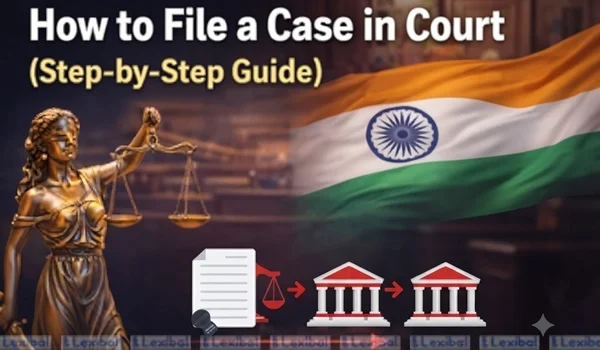
How to File a Case in India: Complete Step-by-Step Guide

Filing a case in India involves more than simply going to a court and submitting a complaint. The correct process depends on what happened, what legal remedy is required, which law applies, which court or authority has jurisdiction and whether the matter is civil, criminal or covered by a specialised law. A civil dispute may…

Read more
Civil Case vs Criminal Case Standard

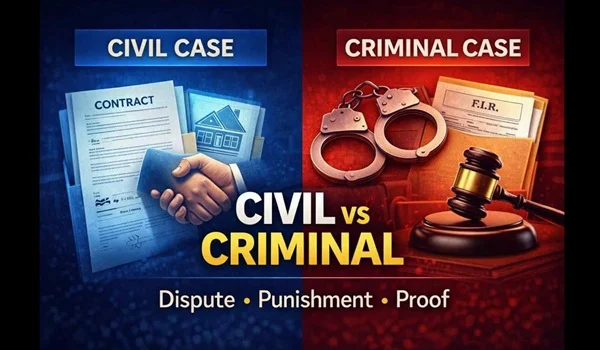
Civil Case vs Criminal Case: Key Differences in India

A civil case and a criminal case are two different types of legal proceedings in India. Although both are decided by courts, they serve different purposes, involve different procedures and can lead to different outcomes. A civil case generally concerns disputes involving private rights, property, contracts, money, family matters or other legal obligations. A criminal…

Read more
What Is Ethereum Standard

What Is Ethereum and How Does It Work?

Ethereum is a decentralised blockchain network and software platform that allows people to transfer digital assets and run applications through smart contracts. Its native cryptocurrency is called Ether (ETH). While Bitcoin was primarily designed as a decentralised digital-money network, Ethereum was built as a programmable blockchain. Developers can deploy smart contracts on Ethereum and use…

Read more
Civil Law vs Criminal Law Standard

Civil Law vs Criminal Law: Key Differences in India

Civil law and criminal law are two major areas of the Indian legal system, but they deal with different types of disputes and legal consequences. Civil law generally deals with disputes involving private rights, obligations, property, contracts, family matters and compensation. Criminal law deals with acts or omissions that are treated as offences and may…

Read more
Loan Applications Get Rejected Standard

Why Personal Loan Applications Get Rejected: Common Reasons & What to Do

A personal loan application can be rejected even when the applicant has a regular income. This is because lenders assess several factors before approving an unsecured loan, including credit history, income, employment or business stability, existing debt and repayment capacity. There is also no single eligibility formula followed by every bank or NBFC. A borrower…

Read more
Plot vs Flat Standard

Plot vs Flat: Key Differences

Choosing between a plot and a flat is an important property decision in India. Both can be used for residential purposes, but they represent very different types of ownership and investment. A flat is a self-contained residential unit within a building or residential project. A plot is a parcel of land that can potentially be…

Read more
What Is a Zero FIR Standard

Zero FIR: Meaning, Rules and Process in India

A Zero FIR allows a person to report information about a cognizable offence at a police station even when the alleged offence occurred outside that police station’s ordinary territorial jurisdiction. The concept is particularly useful when immediate reporting is important and travelling to the police station having territorial jurisdiction could cause delay. Under the current…

Read more